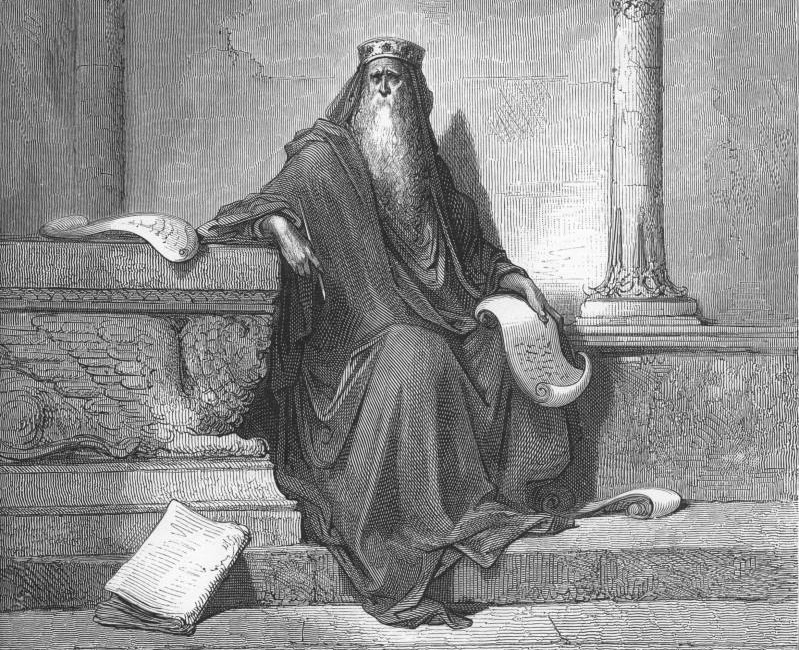
These are my personal reflections on every chapter of Proverbs.
Overview
A collection of proverbs mostly written by Solomon, but also other wise men like Agur and King Lemuel.
Book about wisdom. The thing to know about wisdom is that it is more of an art than a science (i.e. repeatable methods, predictable outcomes, f(x) = Y vs. judgment, intuition, experience, context, people, taste, timing, sensitivity, situational)
Wisdom is the god-fearing art of skillful living. It is pattern recognition. It is discerning signal from noise.
A proverb
- is a general observations about human behavior
- sometimes elevates conducts
- other times contrast/compare
- commands of do’s and dont’s
- figurative language
- positive/negative examples
Proverbs 1
(v.1) The proverbs of Solomon the son of David, king of Israel:
- Consider our primary author: Solomon
- When asked by God for anything, he asked for wisdom so that he could judge righteously and discern between good and evil.
- Example of Solomon’s righteous judgment shown in “baby slicing” story (1 Kings 3:16-28)
- He spoke thousands of proverbs and was a prolific song-writer (1 Kings 4:32)
- He knew his flora and fauna (1 Kings 4:33). Important in understanding figurative language of similies and metaphors.
- Men from all over the known world came to hear him speak (1 Kings 4:34), including the Queen of Sheba (1 Kings 10)
- He was a playboy (1 Kings 11:3) and polygamous passport bro (1 Kings 11:1).
- He was incredibly wealthy (1 Kings 10:23).
- He tasted man’s chief vices: money, sex, and power.
- Important: His wisdom came from God (1 Kings 10:24, James 3:13-18).
- It’s pedagogically important to consider our author. He speaks from a position of experience with lessons of failure (negative example) and success (positive example). We can learn from both.
(v.3) to receive instruction in wise behvaior, righteousness, justice and equity.
- wisdom for life, governance, and justice. especially needed for leaders. Solomon asks for wisdom so he can judge God’s people well (1 Kings 3:9)
(v.5) A wise man will hear and increase in learning, and a man of understanding will acquire wise counsel
- Culture is obssessed with what Einsten called the eighth wonder of the world, compound interest. Money clearly compounds. Wisdom also compounds. Start early. Virtuous cycle. Wisdom begets wisdom.
(v.7) The fear of the LORD is the beginning of knowledge; fools despise wisdom and instruction.
- After a 5-verse build up on the usefulness of Proverbs, the reader is eager for the recipe, the steps, the plan for wisdom. He begins with the fear of the LORD.
- Variants
- Proverbs 9:10 “The fear of the LORD is the beginning of wisdom…”
- Proverbs 15:33 “The fear of the LORD is the instruction for wisdom…”
- “despise”: active rejection, not neutral
- can’t plead ignorance since you can’t despise what you don’t know
- What does it look like for a fool to despise wisdom?
- warning against the dismissive attitude of “out-of-touch, outdated” views (e.g. catchphrase like ‘okay boomer’)
(v.8-19) Temptation: Collective gain at the expense of others
- Situation: Wicked men tempting you to join them in personal gain at the expense of others. Getting ahead in world at expense of others.
- Taken at face value, this mugging/robbery as a group.
- Examples
- Your hood friends tell you that they are going to rob a jeweler and they need a getaway car. Financial gain.
- See this at a young age in elementary, middle, highschool dynamics where people gang up to bully other kids. Social gain.
- 1st century Jews seeing that poor weary travellers are coming to Jerusalem to worship God and charge high fees, essentially robbing them. Jesus flips quite literally over the situation.
- Group of students assembling to cheat on exam together hurting the curve for other honest students.
- White collar criminals lying about investment, pumping a memecoin, rugpulling, defrauding investors.
- People building apps that profit off people’s addictions.
- Section talks about the dangers of peer pressure and collective wickedness.
(v.20-33) The Shout of Wisdom
- Situation: Young man walking through town square (marketplace) and passing by the gates (politics). It’s bustling, busy, almost deafening noise like a crowded tourist attraction. breaking news, people trying to sell you things. Wicked men trying to entice you to join them. Sensual prostitutes enticing you to sleep with them. Leaders trying to amass a following. (This is like your phone.) And out in the midst of ALL this noise, is a call, a shout that is competing with these other sounds: the call of wisdom (the Holy Spirit, mom, dad, friends, pastor)
- Wisdom is filtering signal from noise
- Warning is strong. Heed the voice of wisdom when it calls. There is a point of no return when God lets you have it your way.
- “Today, if you hear his voice, do not harden your hearts” (Psalm 95:7-8)
- Christ is the good shepherd who calls out to His sheep. “My sheep hear my voice, and I know them, and they follow me.” (John 10:27)
Discussion Questions: v.1-7
- What does Scripture tell us about Solomon? How does his life shape the way we read his proverbs?
- Important: His wisdom came from God (1 Kings 10:24, James 3:13-18).
- It’s pedagogically important to consider our author. He speaks from a position of experience with lessons of failure (negative example) and success (positive example). We can learn from both.
- What is the beginning of wisdom? Why is this important?
- NOT experience/intelligence/discipline/wit is the beginning of wisdom
- Fear of the Lord is having a right view of God.
- It takes sin seriously because God is taken seriously.
- You listen when God speaks.
- What does it look like to be “wise” without fear of the Lord?
- “What does it profit a man who gains the whole world but forfeits his soul?” (Matthew 16:26)
- What are the ends (outcomes) of wisdom? Why is this important?
- James 3 “pure, peaceable, gentle, reasonable, full of mercy and good fruits, righteousness”
v.8-19
- What specific scenario is described in these verses? What stands out to you about how temptation is portrayed?
- Where do you see yourself or other men being tempted in this way? How have you failed? How have you prevailed?
v.20-33
- How is wisdom personified in this passage? Why is she shouting?
- What is striking to you about this picture and what are some applications?